Why Protein Matters for Growing Kids
Protein isn't just for athletes—it's an essential building block for growing kids. Learn why protein matters, how much children need, simple ways to include it in everyday meals, and why consistency matters more than perfection.
WELLNESS
If you've listened to a health podcast lately, you've probably heard someone talking about protein. And honestly, for good reason.
Protein has become one of the biggest nutrition topics over the past few years. We've heard about protein for athletes, protein for women over 40, and now more conversations are focusing on protein for children. It's no longer something associated only with bodybuilders and people who spend hours in the gym.
As an exercise physiologist, I've seen just how much attention protein gets for adults. Every week there's another podcast or article encouraging people to eat more of it. The problem is, changing habits as an adult can be hard.
That's what made me think about my own kids.
When they were little, my husband and I made it a point to let them try everything—even foods I wasn't crazy about. I don't like tomatoes, but you'd never know it from watching me eat dinner with my kids. If I wanted them to keep an open mind about food, I had to model it first.
The same idea applies to protein. Building balanced eating habits during childhood is often easier than trying to change them decades later. Helping our kids include protein as part of their everyday meals isn't about raising future athletes—it's about giving growing bodies the nutrients they need while creating habits that can last a lifetime.
What Does Protein Actually Do?
Parents often worry about whether their child is eating enough vegetables, and understandably so. Vegetables are packed with vitamins, minerals, and fiber that growing bodies need. But protein deserves a place in that conversation too.
Protein isn't just about building stronger muscles—it's about building growing bodies.
Protein is one of the body's major building blocks. It helps build and repair muscles, bones, skin, organs, hair, and nails. It also plays an important role in making hormones, enzymes, and immune cells that keep our bodies functioning the way they should.
Fun fact: your skin is actually the largest organ in your body, and like every other organ, it relies on protein to grow, repair, and stay healthy.
For children, protein is doing important work every single day. Every scraped knee that heals, every growth spurt, every playground adventure, and every game of tag that leaves them happily exhausted depends on protein working behind the scenes. It's one of the many nutrients helping their bodies grow stronger as they explore the world around them.
Between birth and adulthood, children experience an incredible amount of growth. Their bones lengthen, muscles become stronger, brains continue developing, and their immune systems learn to recognize and respond to the world around them. Even after the rapid growth of infancy, childhood is a constant cycle of building, repairing, and adapting.
Protein provides the amino acids the body uses to support many of these processes. That's why it isn't just something to think about after a workout—it's an important part of everyday nutrition for growing kids.
The good news is that parents don't have to strive for perfection. Just like exercise, healthy eating is built over time. One meal won't make or break your child's health, and neither will one day of picky eating. What matters most is consistently offering a variety of nutrient-rich foods, including protein, so those healthy habits have the chance to grow alongside them.
Is My Child Getting Enough Protein?
Before you start calculating grams or reading nutrition labels, here's some reassuring news: true protein deficiency is uncommon in healthy children who have access to a variety of foods.
That doesn't mean protein isn't important. It simply means most parents don't need to stress about hitting an exact number every day. Instead, think about the bigger picture. Is your child offered a source of protein at most meals and snacks? If the answer is yes more often than not, you're probably doing just fine.
This is what it looks like in our house.
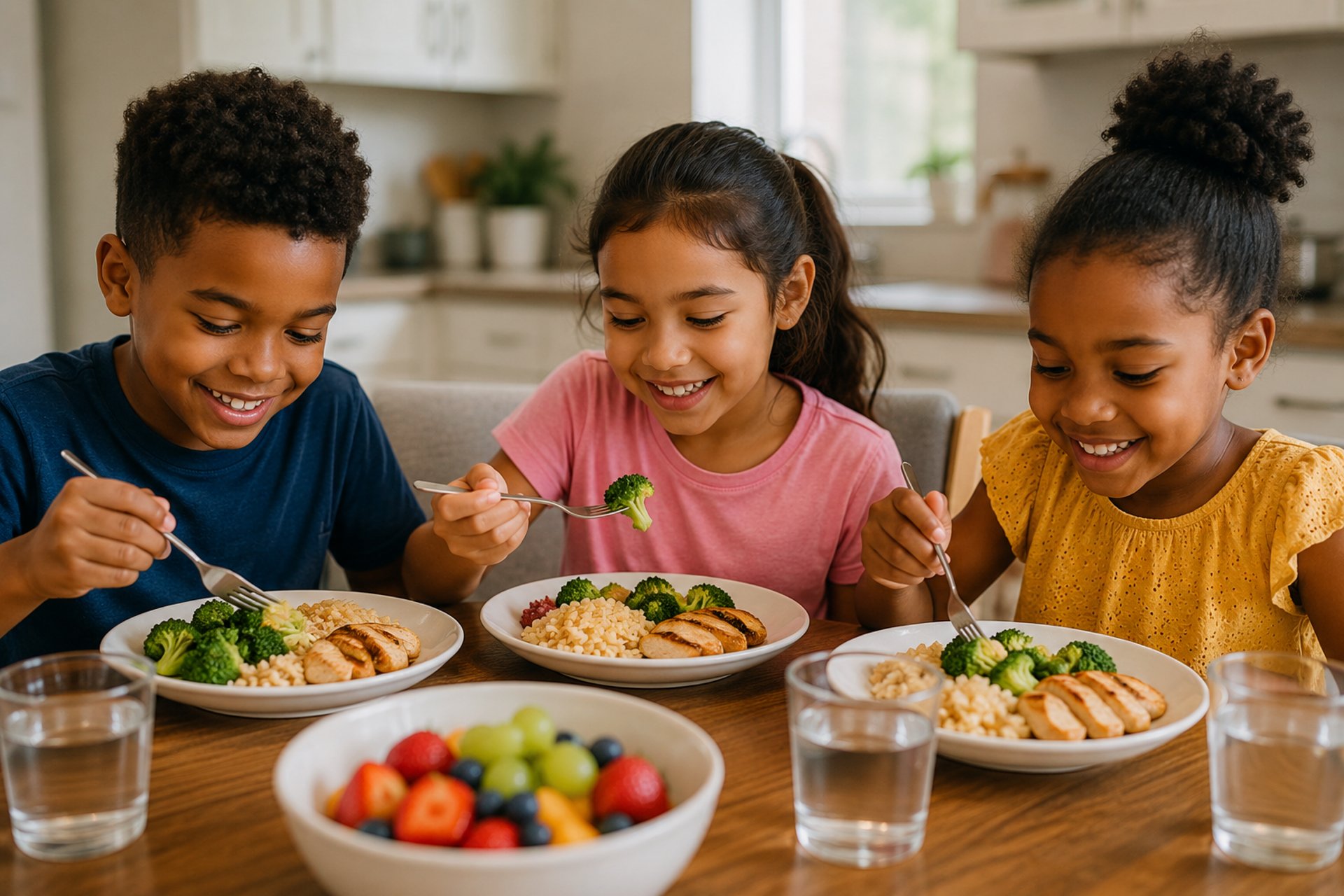
My kids love pancakes, eggs, and bacon for breakfast. Eggs are already a great source of protein, but I like to up the ante by blending cottage cheese into the eggs before cooking them. My kids wouldn't touch cottage cheese on its own, but mixed into scrambled eggs they never notice—and they love them. One quick tip if you decide to try it: don't add too much cottage cheese, or your eggs can become a little watery while they're cooking. Weird, I know.
Snacks are another easy opportunity to include protein. I hopped on the TikTok bandwagon and bought those reusable snack containers, so I'll often pack Colby Jack cheese slices with turkey sticks or apple slices with peanut butter. Every now and then the kids ask to make smoothies, and those have become one of my favorite activities. I'll set out bananas, blueberries, strawberries, spinach, peanut butter, yogurt, and milk, then let them experiment with different combinations. They think they're creating their own recipes, and I'm happy knowing they're getting a little extra nutrition along the way.
What About Protein Powder?
With protein showing up everywhere—from shakes and snack bars to pancakes and cereal—it’s understandable that parents may wonder whether their children need protein powder too.
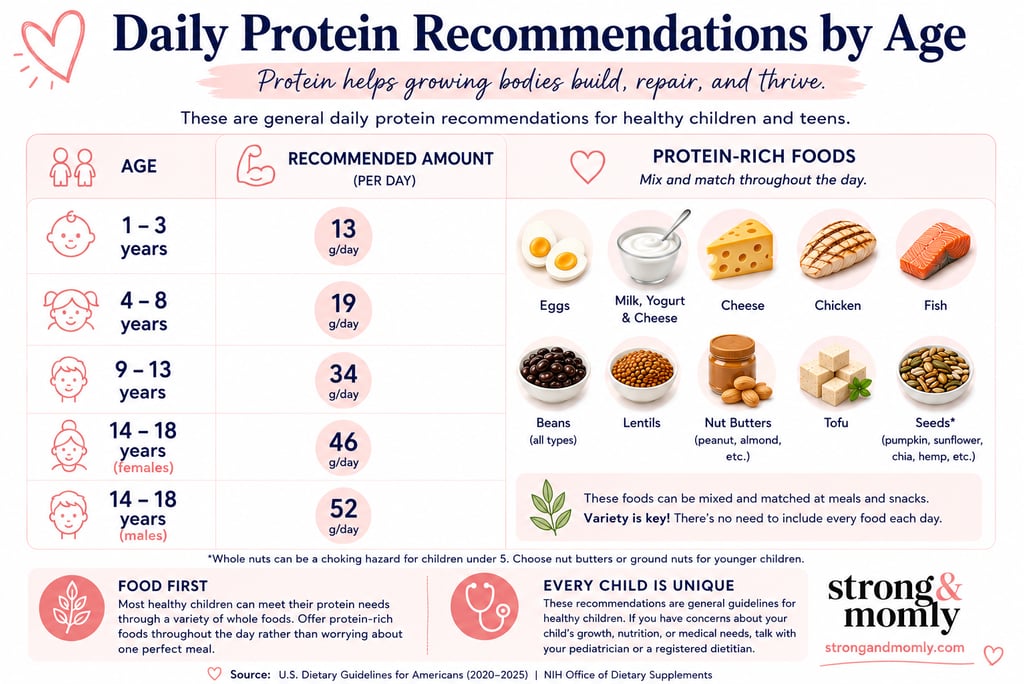
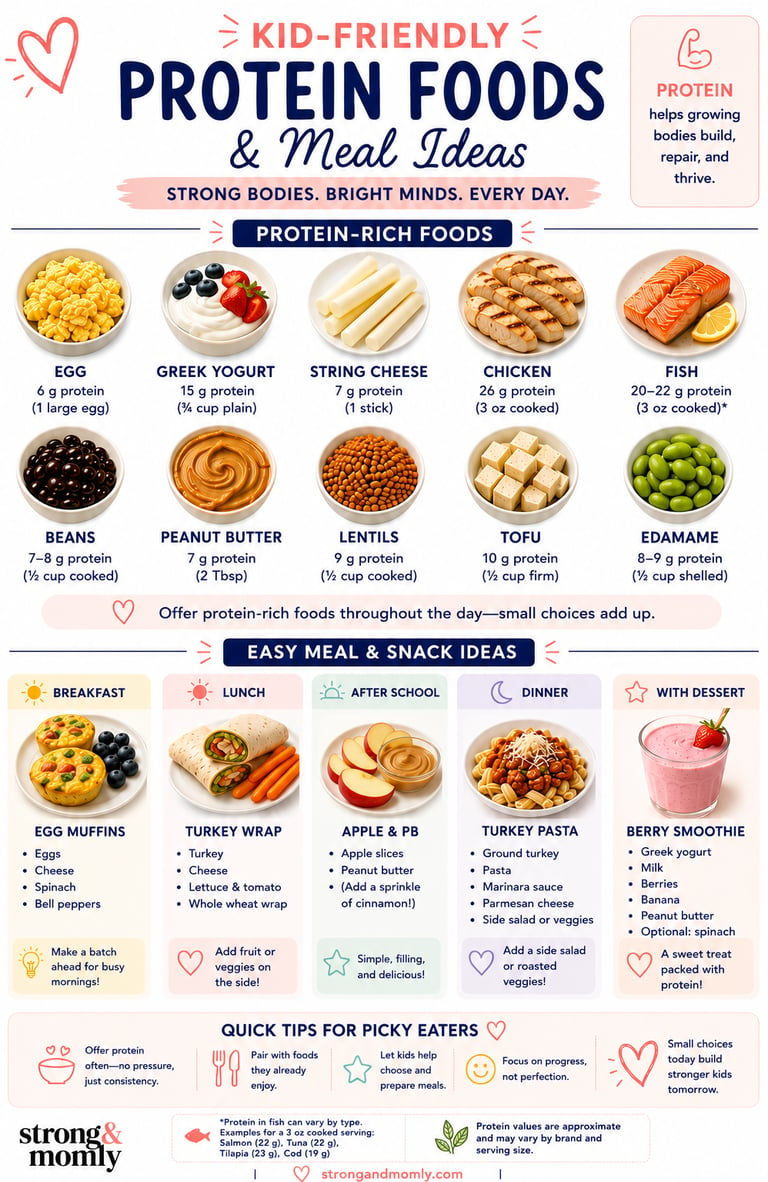
For most healthy children, the answer is no. Kids can usually meet their protein needs through foods such as eggs, dairy products, meat, fish, beans, lentils, tofu, nut butters, and seeds. These foods also provide vitamins, minerals, healthy fats, fiber, and other nutrients that a scoop of protein powder may not offer.
That doesn’t mean protein powder is automatically bad or should never be used. There may be situations where a pediatrician or registered dietitian recommends a supplement for a child with limited food intake, growth concerns, food allergies, or certain medical needs. However, it shouldn’t be the first solution simply because a child occasionally skips the chicken at dinner.
It’s also important to remember that supplements aren’t regulated in the same way as food or medication, and some products may contain unnecessary ingredients or amounts designed for adults. Before adding protein powder to your child’s routine, talk with their pediatrician or a registered dietitian who can help determine whether it’s appropriate.
For most families, the goal can remain straightforward: offer a variety of protein-rich foods throughout the day and let those small opportunities add up.
What If My Child Won't Eat Those Foods?
If you're looking at that list and thinking, "My child would never eat half of those foods," you're certainly not alone. Many children go through phases where they refuse foods they happily ate the week before or suddenly decide their favorite meal is now "gross." While it can be frustrating, these phases are a normal part of development and don't automatically mean your child is missing out on the nutrients they need.
Instead of focusing on getting your child to eat one specific food, keep offering a variety of nutritious options without turning mealtime into a battle. Research suggests that repeated exposure can increase a child's willingness to try new foods, even if it takes several opportunities before they're ready to take a bite. Sometimes seeing a food on the table over and over is part of the learning process.
Children don't need perfect meals any more than adults need perfect workouts. Some days they'll surprise you by eating everything on their plate. Other days they'll seem to survive on three bites of breakfast and still have enough energy to run circles around the house.
Try not to judge your child's nutrition by a single meal—or even a single day. What matters most is the pattern that develops over weeks, months, and years.
As parents, we can't control every bite our children take. What we can do is continue to offer balanced meals, model healthy habits, and create a positive environment around food. Those small, everyday moments may not seem significant at the time, but they add up. Just like strength is built one workout at a time, healthy eating habits are built one meal at a time.
Until next time,
Jessica
Home - Journal - Coaching - About
Connect
© 2026 Strong & Momly -Evidence-based strength for real life.